ISSACHAR IN THE MODERN WORLD
home page
http://www.british-israel.ca
by Steven Collins
Issachar was a son of Jacob and Leah, and this tribe's original inheritance was
located in the region of Galilee. After their migration into Asia, they were one
of the many related Sacae tribes of the Scythians who were located throughout
the steppes of South Russia in the region from Eastern Europe to east of the
Caspian Sea. When the Scythians, and their Parthian relatives, migrated in large
numbers toward Europe and Scandinavia in the centuries after the fall of Parthia,
the tribe of Issachar left its name along the migration route.
Numbers 26:23 records that one of Issachar's clans was named after "Tola," one
of Issachar's sons. This clan's name has long been associated with a region of
Western Russia. The city of "Tula" can be found on Russian maps in the region
south of Moscow, and the entire region (or province) also long been known by the
same name. According to the Encyclopaedia Britannica, this city of approximately
a half-million people:
"…is first mentioned in 1147 [A.D], but its former site seems to have been
higher up the Tulitsa, an affluent of the Upa [River]."[i] [Emphasis added.]
This account indicates the name of “Tula” has been placed on this region for at
least a millennium. The city has existed at its current cite for approximately
nine centuries, but also previously existed at another site located on the
‘Tulitsa” River, not far from the current city of Tula. The river named
“Tulitsa” also bears the name of the Isscharite clan of Tola. This region was a
migration route for other Israelite tribes as well as the River Don (named after
the tribe of Dan) is located in the province of Tula. There is evidence that the
body of Danites in this region took a westward migration route into Europe,
giving their name to the nation of Danmark (Denmark). The Issacharite clan of
Tola took a more northerly migration route into eastern Scandinavia.
The Europeans and Scandinavians are broadly known as “Caucasians,” named after
the Caucasus Mountains between the Black and Caspian Sea. It is from that region
that many Caucasian tribes migrated into Europe. If one draws a line from the
Caucasus Mountains to the region where the names of the Issacharite clan of Tola
are located and extends it onward to the north, your line will arrive in the
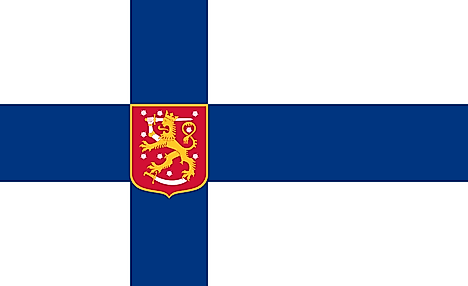
nation of Finland.
There is strong biblical evidence that Finland is the modern homeland of much of
the tribe of Issachar. I use the word “much” of the tribe of Issachar as there
is also biblical evidence that part of it may be located elsewhere. The tribe of
Issachar did not go into Asia from its old tribal homeland by Galilee in one
piece. II Kings 15:27-29 records that King Tiglath-pileser of Assyria invaded
the ancient Kingdom of Israel approximately two decades before the city of
Samaria fell. Tiglath-pileser took captive the tribes living in Gilead (Reuben,
Gad and half of Manasseh), Naphtali, which lived north of the Sea of Galilee and
unspecified numbers of Israelites from other tribes who lived in “Galilee.” The
tribe of Issachar lived in the region of Galilee so it is very likely that a
portion of this tribe went into Asia at this time. The remainder of the tribe
left its ancient homeland around the time when Samaria fell, and this author’s
book, The “Lost” Ten Tribes of Israel…Found!, makes the case that this remainder
of the tribe of Issachar migrated with remnants of the other tribes to the
region by the Black Sea in the Caucasus Mountains, where they were afterward
known as Scythians or “Sacae” (named after their forefather, Isaac).
While the Issacharites who relocated to the Caucasus Mountains apparently
migrated into Scandinavia via the Southern Russian region which bears a name of
a tribal clan of Issachar, other Isscharites may have taken alternate routes
into Europe along with the other tribes of Israel. I note that Yair Davidy’s
book, The Tribes, agrees that many Isscharites migrated to Finland, but it
traces other elements of that tribe to the modern nation of Switzerland in
Central Europe.
It is my view that Genesis 49 offers us the best clues regarding the whereabouts
of the modern tribes of Israel. While the scholarly writings of historians do
give valuable clues to the locations of the tribes of Israel, all men are
fallible and their writings do not carry the weight of scripture. Genesis 49,
found in the Torah, is a prophecy which offers divinely inspired clues about the
locations and characteristics of all the tribes of Israel in “the latter days.”
It is also my view, common among Christians and Jews alike who are students of
the bible and prophecy, that we are living in the “latter day” period of time
which precedes the Messianic Age. Therefore, Genesis 49 is applicable to our
modern era and to modern nations. Genesis 49 itself confirms that we are living
in the “latter days” as so many of its clues are very descriptive of modern
European and Scandinavian nations.
The Bible offers a very descriptive clue in Genesis 49:14-15 regarding the
location of the tribe of Issachar in the latter days. It states:
"Issachar is a strong ass couching down between two burdens: and he saw that
rest was good, and the land that it was pleasant; and bowed his shoulder to
bear, and became a servant unto tribute." (KJV)
To identify this nation, we must look for a nation in Europe (and likely
Scandinavia) which has a tradition of being quasi-independent ("under tribute"),
located "between" two stronger nations or spheres of influence (the "two
burdens"), and dwelling in reasonable peace and prosperity (their "rest was
good, and...the land...was pleasant.")
In the ancient world a nation that was "under tribute" had limited self-rule and
autonomy while under the dominance of a stronger nation. In ancient days this
tribute was generally an annual payment of gold or the cessation of territory.
The nation of Finland has long been in the condition of living in a buffer zone
between stronger, competing nations. After centuries of Swedish rule, the 1700's
and 1800's saw Finland caught between Russia and Sweden, who fought for
sovereignty over Finland. Finland’s sovereignty has been compromised ever since.
From 1899 to 1905, Russia dominated Finland, and the Encyclopaedia Britannica
wrote:
"Russian officials and the Russian language were foisted on Finland wherever
possible, and in 1903 the Russian governor...was invested with dictatorial
powers."[ii]
The Finns were literally "under tribute" to Russia as "the Tsar peremptorily
fixed an annual contribution"[iii] on Finland. In World War I, the Britannica
notes that "Finland escaped invasion, but her liberties were restricted."[iv]
This aptly describes a nation under tribute. World War I also saw Finns
volunteering for service in the armies of both Germany and Russia (their "two
burdens"). Some independence was restored in 1917, but in 1918, Finland
"concluded a treaty which made her Germany's ally and vassal."[v] Finland was
now "under tribute" to Germany, its other "burden." Between the world wars,
Finland became increasingly identified as a Scandinavian nation, but the
Russians again launched an attack on Finland as World War II began. The Finns
made a heroic resistance against the Russians, but had to sign a treaty ceding
territory and dominance to Russia. Finland remained a nation “under tribute.”
When Germany attacked Russia in 1941, Finland briefly allied itself with Germany
before signing an armistice with both Great Britain and Russia in 1944. At the
end of World War II, Finland had to pay certain amounts of finished industrial
goods (more "tribute") to the Russians.
Finland has been a buffer state between stronger nations for most of its history
and has literally been "under tribute" to other nations in recent history. Its
current "tribute" is Finland's neutralist foreign policy, for which it receives
an accommodative relationship with its bigger neighbors. Since Finland is
located in a "buffer zone" between the western and eastern blocs, a neutralist
position is a politically safe one for Finland. The Finnish capital, Helsinki,
even gave its name to the "Helsinki Accords," an East-West agreement signed in
the neutralist nation of Finland.
Finland has found its peace and prosperity despite its "couching down between
two burdens." This condition is so uniquely Finnish that it has even given birth
to the term "Finlandization." Finland accepts some limitations on its
sovereignty, but it currently enjoys a milder form of "tribute" than it has
borne in recent history. It is currently a prosperous nation and is the
headquarters of Nokia, the famous telecommunications company that is a dominant
supplier of cellular phones to the world.
It is also likely that at least some of the Baltic people of Estonia, Latvia and
Lithuania are part of the tribe of Issachar. These small, Baltic nations have
also been "couched down between two burdens." Russia and Germany have
historically competed for control of these nations. The Estonian language and
the Livonian (“Livian”) dialect of Latvia confirm historic ties to Finland as
both tongues are linked to the "Finno-Ugric" family of Indo-European
languages.[vi]
Finland very literally fulfills the prophecy about Issachar's descendants in our
modern world.
--------------------------------------------------------------------------------
[i] Encyclopaedia Britannica, 1943 Ed., Vol. 22, see “Tula,” p. 538
[ii] Ibid, Vol. 9, see “Finland,” p. 253
[iii] Ibid, p. 253
[iv] Ibid, p. 253
[v] Ibid, p. 254
[vi] Ibid, Vol. 8, see “Estonia,” p. 739